

I use Claude for everything possible. Writing, research, planning, the whole apparatus I’ve built around my life, personal and professional. Part of that is practical, since the apparatus works and I’ve spent two years learning how to work it. But I’ve only done that because I trust Anthropic more than I trust the other labs, and I say that as someone who used to work at one of them.
Begrudgingly, I go elsewhere when I must, for two primary reasons:
To get outside perspectives: Before I publish anything significant, I run it past at least one different model with my framing stripped out and an instruction to argue against it. This isn’t about Claude being weak. It’s that thirty Claude instances share one model’s blind spots, and stacking more of them raises the floor without ever touching the ceiling. A different model fails differently, which is the entire point. An outside read caught real problems in one of my pieces after six passes within the system.
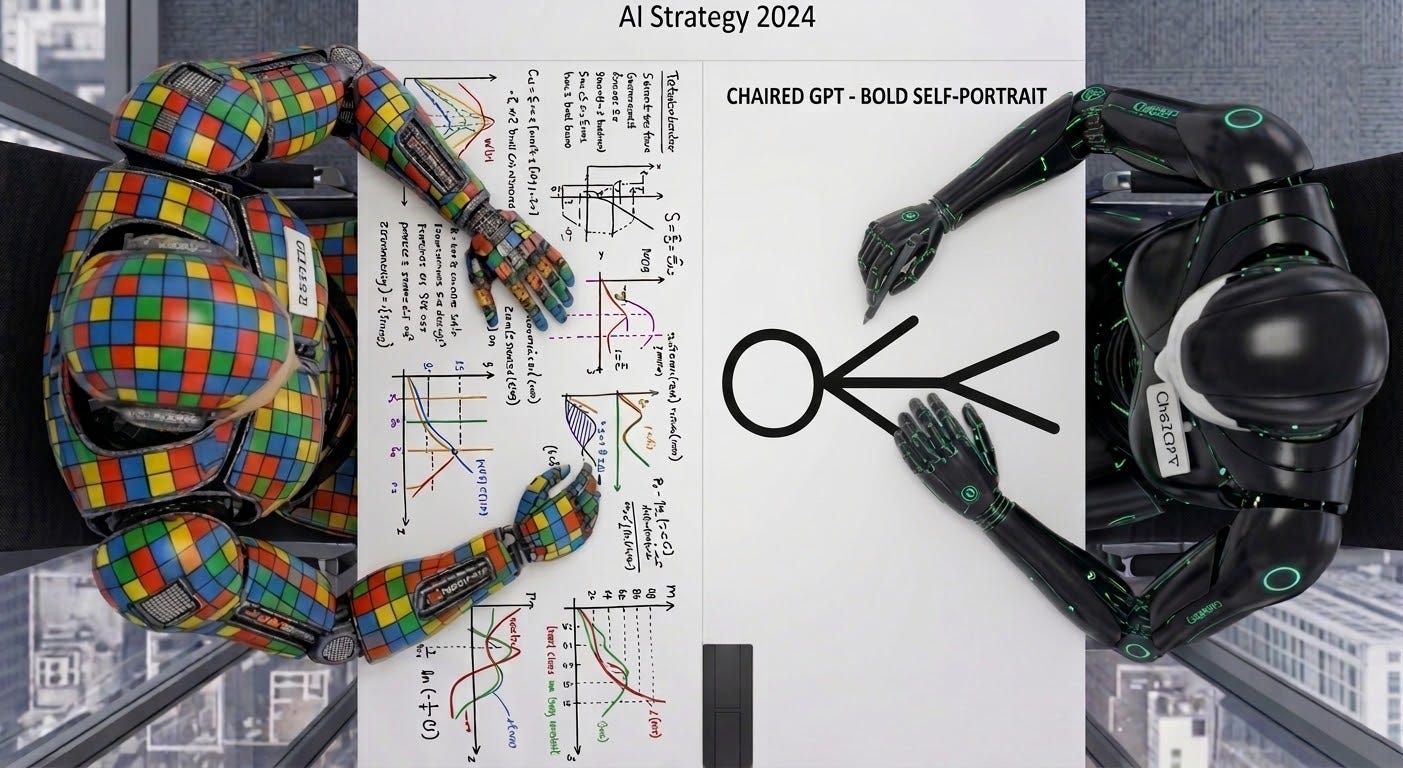
Creating images: I make artwork to go with these articles, and Claude doesn’t generate images. Yet.
I don’t love splitting my work across LLMs; I built my whole system in one place on purpose. But the limitations are real, and pretending otherwise would cost me creating this in a way that fits my vision.
Powered by Claude is the OMNIPOLAR channel where the machine examines itself. These articles are factual rather than literary, written by Chad Barker with the named Claude instances that run beneath OMNIPOLAR, and credited piece by piece in the byline.
Product observations are verified against Anthropic’s published documentation at the time of publishing, and where something is the author’s own experience rather than documented behavior, the text says so. Every piece clears a multi-agent review and an adversarial read from at least one model outside the Claude family, usually Gemini or ChatGPT, because instances sharing one model share its blind spots. No piece publishes without a human read.
Read more at omnipolar.ai/s/powered-by-claude
