

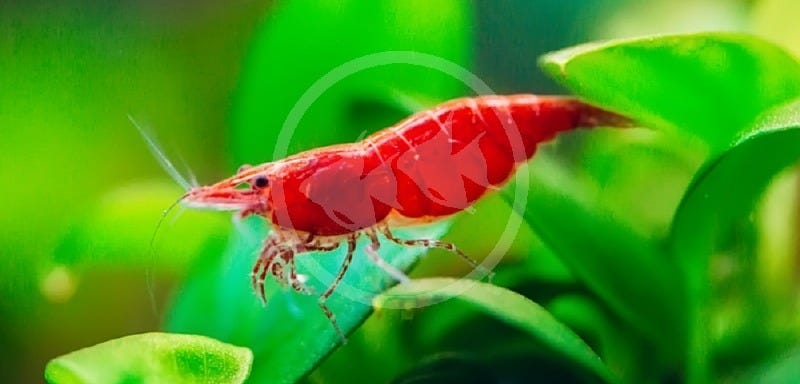
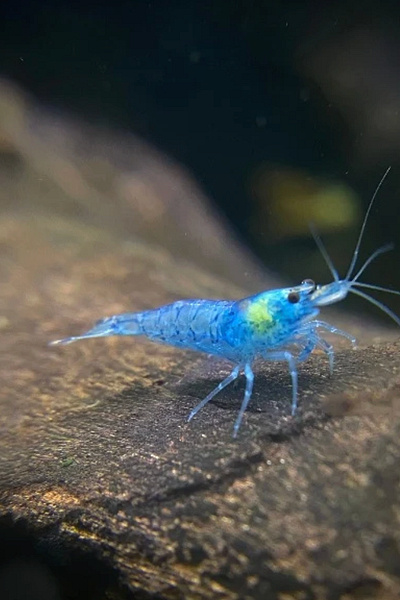
My family and I recently attended a wedding, where we found out one attendee has a fledgling hobby-cum-business of breeding “designer shrimp,” which I later learned are officially known as ornamental shrimp.
Having never heard of such a shrimp, I felt compelled to start a ridiculous side-bar exchange with the one person who really gets my sense of humor (also in attendance at the wedding). For the sake of anonymity, I shall refer to this person as they/them/friend.
Quickly, a one-off Claude prompt fed a text that, well, turned into a full-blown research thesis with the following stated objective:
To establish that ornamental shrimp breeding is the most consequential domestication event in the history of life on Earth, and the only one its participants have been awake for.
Not wanting to put in any real work of my own — I will only go so far for a joke — I went to Benny, the Claude chat instance who serves as my trusty Research Analyst.
The Prompt
My original prompt to Benny:
“I need a research paper on the positive aspects of expensive designer shrimp”
The Abstract
After a little back-and-forth dialing in the degree of absurdity, we produced this abstract for what Benny specced to be a 1,518-page thesis officially titled “THE COMPRESSED NEOLITHIC: Ornamental Caridina Breeding as the Terminal Event in the History of Selective Agency.”
Pick a Chapter for Review
And since, why stop there, I gave my friend the option of reviewing whichever chapter they wanted from the following:
The Problem of the Invisible Domestication: On the Impossibility of Noticing Fifteen Thousand Years, With Reference to the Dog, Who Did Not Notice Either
Antecedents in the Domestication Record: Wheat, Cattle, the Horse, the Silkworm, and Four Species That DeclinedThe Compression: Ninety Days and the Collapse of the Neolithic Interval, Wherein an Entire Agricultural Revolution Is Observed to Occur in a Spare Bedroom in Under Six Years
Grading as Epistemology: S, SS, SSS, and the Fourth Grade That Two Men in Osaka Refuse to Recognise
The Price of Information: Market Structure in the Ornamental Trade, With Attention to the Four-Hundred-Dollar Animal That Weighs Less Than a Postage Stamp
Manufactured Scarcity in a Species That Reproduces Exponentially: The Breeder's Dilemma, Being the Obligation to Sell Before One's Own Success Destroys the Price
Reversion, or the Second Law in a Two-Gallon Container: On the Impossibility of Rest, and What Is Found Upon Returning From an Eleven-Day Holiday
The Rehearsal: What Is Owed to the Specimen That Graded PoorlyThe Propagation Thesis: A Business Plan for the Cessation of Human Conflict, Including Unit Economics, Milestones to Year Seven, and an Exit Strategy
Objections, Anticipated and Received: Including the Objection That This Is Not a Thesis, Answered at LengthThe Inversion: On the Original Surviving Only in the Form of Its Improvements
Appendix A — Complete Grading Nomenclature, with Contested Cases: Including Eleven Patterns Named by Marketers and Subsequently Accepted by Everyone
Appendix B — The Culling Register, 2019–2026: 41,206 Entries, Graded, Dated, and Dispositioned, Without Commentary
Appendix C — Daily Water Parameter Logs: Two Thousand Five Hundred and Fifty-Five Consecutive Mornings
Appendix D — Survey Instrument and Schedule of Non-Responses: The Instrument, and the Two Hundred and Nine People Who Did Not Return It
Appendix E — Correspondence with Breeders: Being Letters Sent, and the Four Replies
Appendix F — Financial Model, Propagation Thesis: Seven-Year Projection to Global Harmony, in Constant Dollars
Appendix G — Colour Reproduction Failures, a Portfolio: Forty Pages Demonstrating That the Animal Cannot Be Photographed
Appendix H — Glossary: Terms of Art, Including Nine the Hobby Uses Constantly and Cannot Define
Appendix I — Index of Named Specimens: Every Shrimp Given a Name, and the Date It Stopped
Appendix J — Figures: Sixty-Four Plates, of Which Figure 4 Is Gerald
They wisely chose Chapter 7.
The Chapter That’ll Never Get Read
So Benny and I set out to write Chapter 7, knowing it would never be read.
The joke, as far as I was concerned, was in the creation.
If you’d like to see another chapter, or even the entire thesis, please let us know.
Use code-word “Dumb.”
Epilogue: Questions for an Ornamental Shrimp Breeder
To be clear, this ‘project’ was always about humoring ourselves; it was never about mocking the person with this passion.
That said, in case we ended up speaking with this person at the wedding, we thought it wise to have legit questions that we could raise sincerely, simply to learn more.
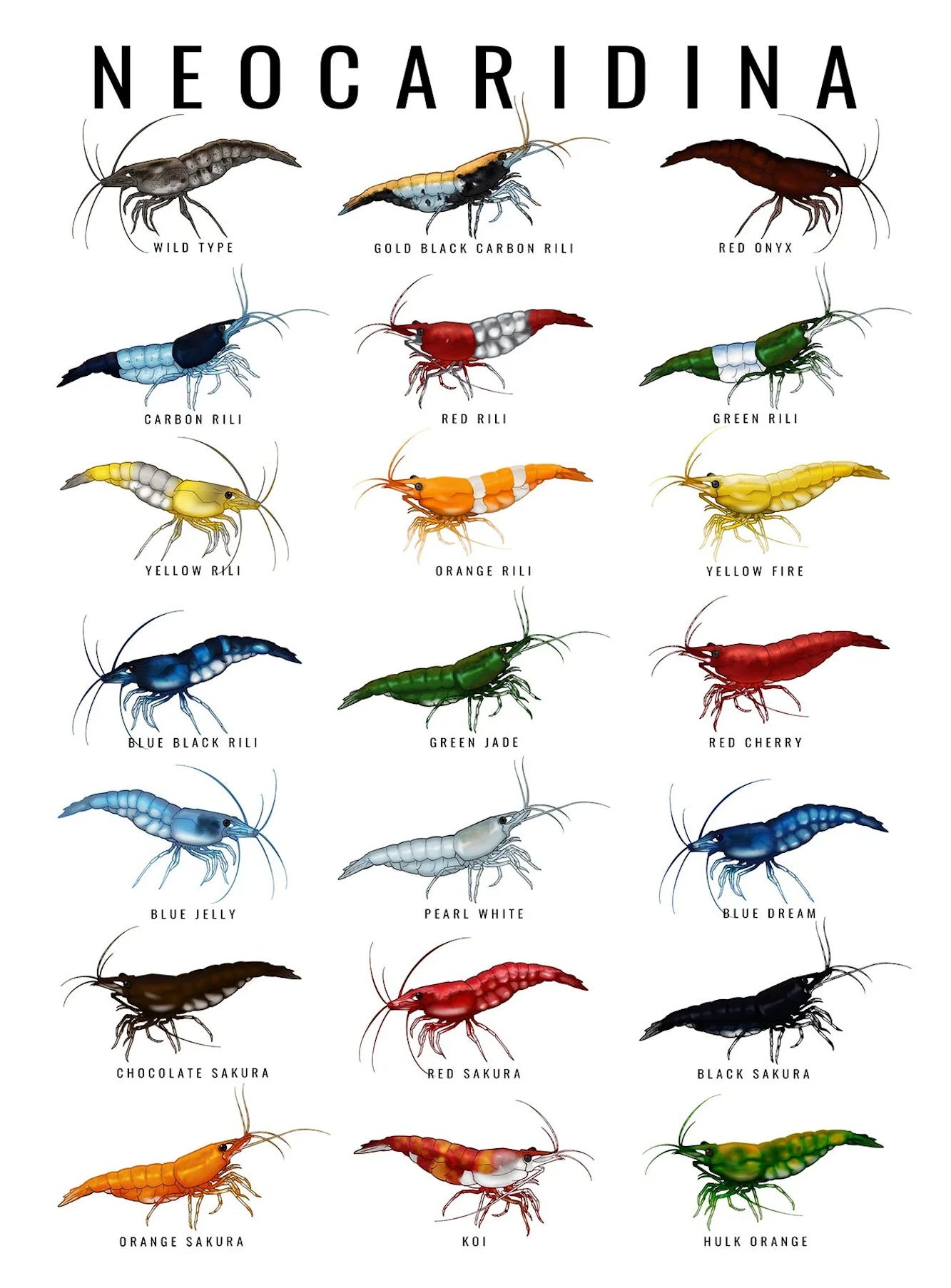
Are your ornamental shrimp Neocaridina or Caridina? — I ask because my understanding is that determines everything else, since one breeds in tap water and sells for a few dollars and the other needs precise water chemistry and can run to hundreds per animal.
Which color line are you running, and do you keep the colors in separate tanks? — Is it true that every Neocaridina color is the same species, so reds and blues in one tank produce brown offspring within a few generations? I’ve read that’s the most common way people lose a colony without realizing it.
Are you running RO with a remineralizer, or straight tap? — I ask because my understanding is that RO means stripping the water to nothing and rebuilding it to a target, which sounds like a weekly ritual and a real commitment.
Do you cull? — My understanding is that’s what actually separates keeping shrimp from holding a line, and that nobody in the hobby brings it up unprompted because it’s the least pleasant part.
Have you tried the local aquarium club auctions? — I’ve read that’s the standard way breeders build a reputation, because buyers see the animals in person and word travels regionally in a way it doesn’t online.
Alas, I never had the opportunity to speak with the designer shrimp breeder.
But feel free to use these if you ever do run into them.
Audience of One is where things get made for a single person. Everything here was built to make one specific reader laugh, and that reader is never named — so anyone who finds it is free to suspect it might be them. The work is deliberately disproportionate to its purpose: forty thousand museums on one page, a 1,518-page thesis on ornamental shrimp of which one chapter exists, an announcement of a never-really-played board game with a companion article laying out its fictious past. The concept, the development and the execution are the enjoyment, and the only measure is whether the person it was for laughed.
For more, visit omnipolar.ai/s/audience-of-one